
Treatment for Disc Herniations and Bulges in Vancouver
- Disc issues often relate to stiff spinal joints and posture load.
- We restore motion and teach safe ways to sit, stand, and lift.
- Short home drills help reduce stiffness and protect the back.
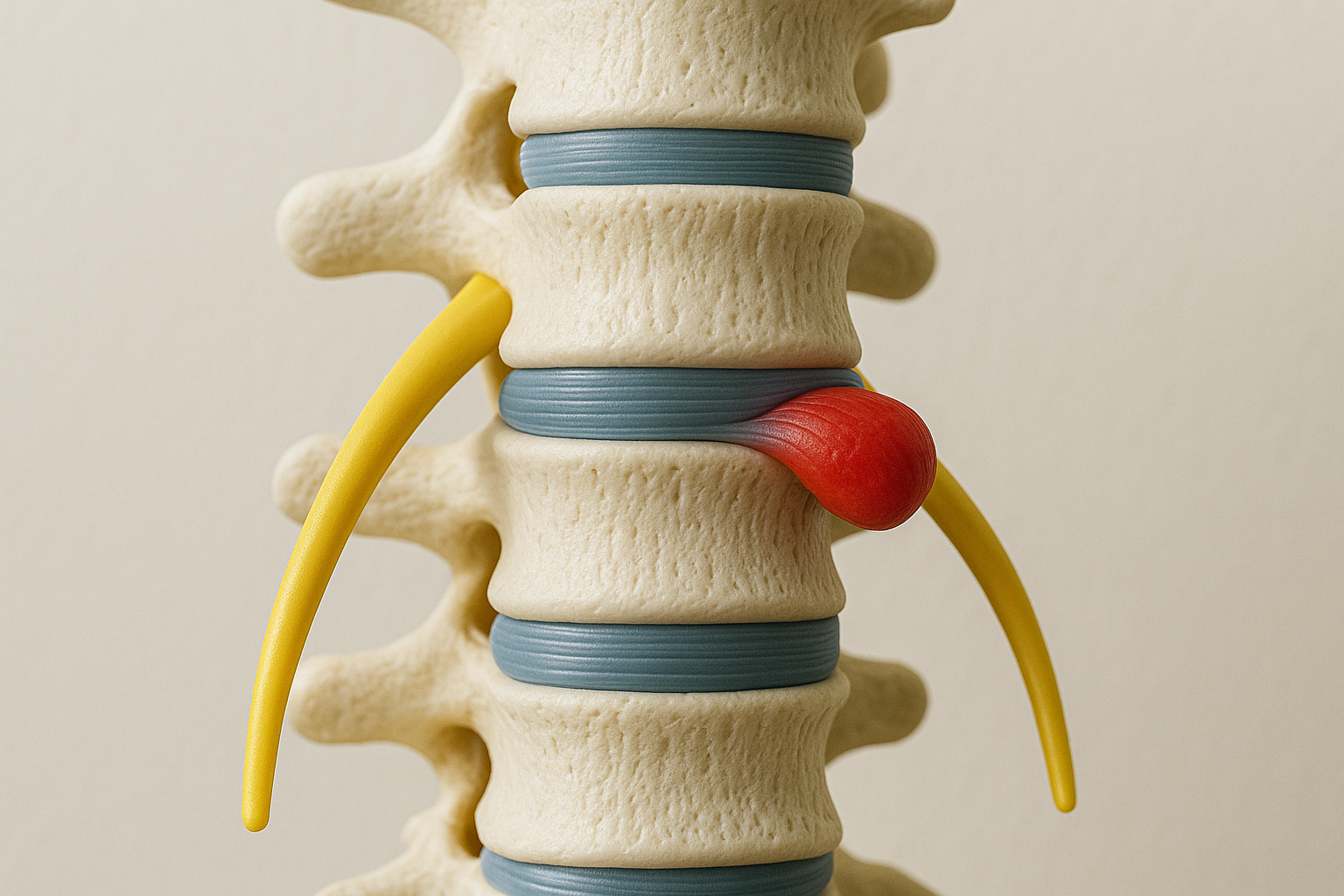
Disc problems in the low back can change how you move, sit, lift, and even rest. A disc bulge or herniation may cause sharp pain, tingling, or weakness in the leg, while others experience deep stiffness that makes simple tasks feel harder than they should. Many people in Vancouver search “chiropractor near me” when these symptoms begin affecting their routine. At Revolution Health, we support patients from Cambie South and surrounding neighbourhoods by focusing on the mechanical factors that influence disc health—joint motion, posture, and the daily patterns that load or unload the spine.
A core chiropractic principle is that the body is self-healing and self-organizing. The spine is designed to distribute force evenly across its joints and discs. When certain segments become fixated and lose their healthy motion, other segments compensate by moving too much. This imbalance increases stress on the discs over time. Our role is to restore motion where it has been lost, guide healthier movement patterns, and help you build habits that protect your spine long-term.
Disc bulge vs. disc herniation: understanding the difference
Although the terms “disc bulge” and “disc herniation” are often used interchangeably, they describe different changes within the disc.
A disc bulge occurs when the outer fibers of the disc stretch outward. The disc remains intact, but its circumference becomes wider and can press on nearby tissues. A herniation, on the other hand, occurs when the inner gel-like nucleus pushes through a tear in the outer ring. This can create more focal irritation and sometimes sharper symptoms.
Bulges are typically broader and often develop slowly from repetitive strain, long hours of sitting, or lifting with rounded posture. Herniations are more localized and may appear after a sudden load or awkward movement. Both conditions can influence nerve pathways, but herniations more commonly cause acute leg pain, numbness, or weakness.
What matters clinically is not just the imaging or the terminology—it’s how the spine moves around the affected segment. Fixated joints create uneven mechanical stress. When one vertebra cannot move properly, the next one picks up the slack, often excessively. This “see-saw” pattern concentrates load into a smaller area of the disc, increasing wear and tear.
By restoring normal motion to these fixated joints through chiropractic adjustments (when appropriate), we help distribute load more evenly. This reduces mechanical stress and often supports the body’s natural capacity to stabilize and repair.
Corrective chiropractic care and restoring joint motion
Your first visit starts with an assessment that checks posture, lumbar motion, hip mobility, and how your pelvis moves when you bend and walk. We also look closely at daily habits—prolonged sitting, twisting to lift objects, long drives, or uneven carrying patterns. These small, everyday stressors shape the forces your spine absorbs.
When appropriate, gentle chiropractic adjustments are used to restore motion in the joints that have become restricted. This reduces compensatory overload and helps the body use more balanced movement patterns. The goal is not to “fix the disc” directly but to change the environment around it so the disc is no longer under constant strain.
We also incorporate mobility and stability drills that match your stage of recovery:
• Early-stage drills may include pelvic tilt variations, supported breathing patterns, or easy hip mobility work that keeps movement safe and controlled.
• Mid-stage rehab introduces light core activation, hip hinging mechanics, and gentle rotational control.
• Late-stage drills support your return to lifting, exercise, and the movements that matter most to you.
Each exercise is chosen for its ability to reinforce better movement without irritating the disc.
Here are core focus areas in disc care:
• Restoring motion to fixated lumbar segments
• Coaching posture for sitting, standing, and lifting
• Teaching safe, staged mobility drills
• Improving hip strength and control
• Encouraging daily micro-breaks that reduce cumulative load
Posture correction and the impact on disc pressure
Posture plays a major role in disc health. Sitting with the pelvis rolled back increases pressure at the front of the disc. Over time, this weakens the outer fibers and contributes to bulges. Standing with the spine stacked more evenly reduces strain and allows the body to distribute force the way it was designed to.
Most people don’t realize how much posture shifts throughout the day. A slouched couch position, leaning forward at a laptop, or long commutes can all add up. We guide you through practical changes to your workstation, car seat, and home setups so your spine experiences less cumulative stress.
Even simple breathing patterns influence posture. Shallow breathing tightens the upper body, while diaphragmatic breathing encourages a more neutral spine. These details matter. They create an environment where movement feels easier and the spine can adapt.
How movement supports disc health
Discs rely on movement for nutrition. Because they have limited blood supply, they depend on pressure changes created by motion—walking, bending, and gentle spinal gliding. When joints become fixated, the disc loses this natural pumping effect. Over time, the disc becomes less resilient.
Gentle chiropractic adjustments restore this lost motion. Walking, safe core drills, and daily posture resets maintain it. When combined, these steps support your body’s ability to recover.
Some patients also benefit from related services we offer. For example, many disc issues overlap with sciatica. If leg pain is part of your symptoms, our Sciatic Pain Reduction and Correction page explains how care can address both the spine and the irritated nerve. Linking care between these conditions ensures a more complete plan.
Daily habits that protect your spine
Disc recovery is built from many small choices throughout the day. Here are guidelines we frequently give patients:
• Stand up every 45 minutes to reduce compression.
• When lifting, hinge at the hips, keep items close, and move your feet instead of twisting.
• Avoid sitting on soft couches for long periods—support your low back instead.
• Walk several short intervals throughout the day instead of one long session.
• Use a neutral spine when getting out of bed or rising from a chair.
These habits sound simple, but they dramatically reduce load on the discs. As a result, many people feel more stable and more confident in their movement.
Building a plan that fits your life
Disc recovery takes time. The body adapts gradually, and progress often builds slowly but steadily. Our goal is not to chase perfect posture or eliminate every flare-up, but to help you create patterns that reduce irritation and allow you to return to your normal routines.
Patients often share that they feel stronger, more aware of their movement, and better able to navigate their day without worrying that one wrong move will set them back. These changes come from consistency—not intensity.
Disc bulges and herniations sound intimidating, but they are manageable with the right plan. Chiropractic care focuses on the mechanical forces that influence disc health. When we address fixated joints, guide posture, and teach safe patterns, many people return to daily activities with greater comfort and confidence.
If you're ready to take the next step toward steadier, more comfortable movement, we’re here to help.
Book your appointment for disc herniation and bulge treatment today.
