Neuromuscular Rehabilitation in Vancouver
When an injury, accident, or long period of poor posture changes the way you move, the nervous system adapts. Muscles learn new patterns, often in ways that guard against pain. At first this protection feels helpful, but over time the compensations themselves can become a problem. For one patient in Yaletown, shoulder pain lingered long after the original strain healed, not because the tissue was damaged, but because the nervous system had “remembered” a guarded pattern. Neuromuscular rehabilitation is designed to reset these patterns and guide the body back toward efficient, balanced motion.
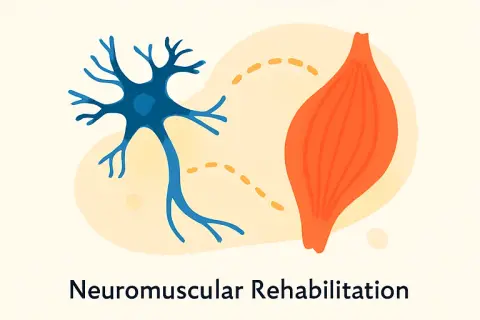
Why the nervous system matters
One of the guiding principles of chiropractic care is that the nervous system coordinates every function of the body, including repair. When joints lose proper motion, signals to and from the nervous system become less clear. Muscles tighten, tissues repair unevenly, and posture changes. This is often why discomfort lingers even when scans show no obvious injury.
Neuromuscular rehabilitation uses movement, feedback, and corrective exercises to restore clear communication between the brain, nerves, and muscles. By improving this signaling, the body becomes more efficient at organizing itself and repairing tissue.
What is neuromuscular rehabilitation?
At its core, it’s a method of retraining how your body moves. This may involve:
- Targeted exercises to activate weak muscles
- Mobility drills to free stiff joints
- Balance and coordination tasks to reconnect movement patterns
- Posture coaching to prevent old habits from returning
The goal isn’t to strengthen everything at once. It’s to identify the weak links that cause compensation and rebuild movement from the ground up.
Why would someone need it?
People often search “Why do I still feel sore even after my injury healed?” The answer is usually poor neuromuscular coordination.
Examples include:
- Low back pain that persists because hips aren’t stabilizing properly
- Neck stiffness that lingers after whiplash because shoulder muscles remain overactive
- Knee discomfort that keeps returning because the glutes and core aren’t firing together
Neuromuscular rehabilitation identifies these patterns and teaches the nervous system new, healthier ones.
What happens during a session?
A session usually begins with a movement screening. You’ll be guided through simple motions, squats, reaches, bends, while posture and coordination are observed. From there, targeted drills are introduced. These may be as simple as activating a muscle group with resistance bands or practicing controlled balance on one leg.
Feedback is a big part of the process. You may be asked to notice how a movement feels, pause when a pattern breaks down, or repeat until the nervous system “remembers” the better pattern. Over time, these repetitions restore efficiency.
How does this support healing?
Another core chiropractic principle is that the body is self-healing and self-organizing. Neuromuscular rehabilitation doesn’t force healing, it creates the conditions for healing to happen more smoothly. When joints move properly and muscles coordinate well, stress is spread evenly. This gives tissues the chance to repair without overload.
Common questions people ask
Is neuromuscular rehab painful?No. The exercises are controlled and tailored to comfort. Discomfort signals that the pattern is wrong and can be adjusted immediately.
Do I need special equipment?Most drills use body weight, bands, or simple tools. What matters most is repetition and clear feedback, not heavy gear.
How long does it take to see results?Some people notice improvements in coordination within weeks. For others, especially after long-standing issues, the process may take months. Progress is measured in everyday wins, smoother walking, easier lifting, less guarding.
Is it just for athletes?Not at all. Office workers, parents, and seniors all benefit. Anyone whose nervous system has adapted poorly after strain, stress, or inactivity can find value.
How neuromuscular rehab connects with other services
Neuromuscular rehabilitation is rarely the only step. It pairs naturally with mobility and flexibility training, which improves the range joints can move through. When combined, mobility clears the path while neuromuscular rehab teaches the nervous system to use that path efficiently.
Read more about Mobility and Flexibility Training in Vancouver
Everyday improvements patients notice
The benefits of neuromuscular rehab often sound simple, but they matter every day:
- Walking upstairs without uneven weight shift
- Carrying groceries without hip or shoulder pain
- Sitting through a workday without the body “locking up”
- Returning to workouts with more confidence in motion
One Yaletown patient explained that they no longer feared bending to pick something up, because their body finally felt stable again. That sense of trust in movement is the real goal.
Moving forward with confidence
Neuromuscular rehabilitation helps the body return to its natural rhythm of healing and repair. By restoring clear nerve signals, retraining muscle coordination, and reducing stress on tissues, it supports a more efficient and resilient system. It’s not about chasing perfection. It’s about teaching the body to move in balance again so daily life feels easier.
If you’d like to understand how your body organizes movement, and how to restore confidence in it, contact us here.
Reviews from our patients
5.0 stars · 132+ reviews on Google (read our reviews on Google, opens in a new tab)Reviews are published by patients on Google. Individual experiences vary.